



ನೆಮ್ಮದಿಯ ಬದುಕಿನ ಯಕ್ಷ ಪ್ರಶ್ನೆ!
The Mystery of Peaceful Life
Тайна умиротворённой жизни
Even today, when people are unable to discover the real truth about something, an expression frequently heard in everyday conversation is “Yaksha Prashna” (the Yaksha’s Question)!
What exactly is this Yaksha Prashna? It refers to an episode in the Vana Parva of the Mahabharata.
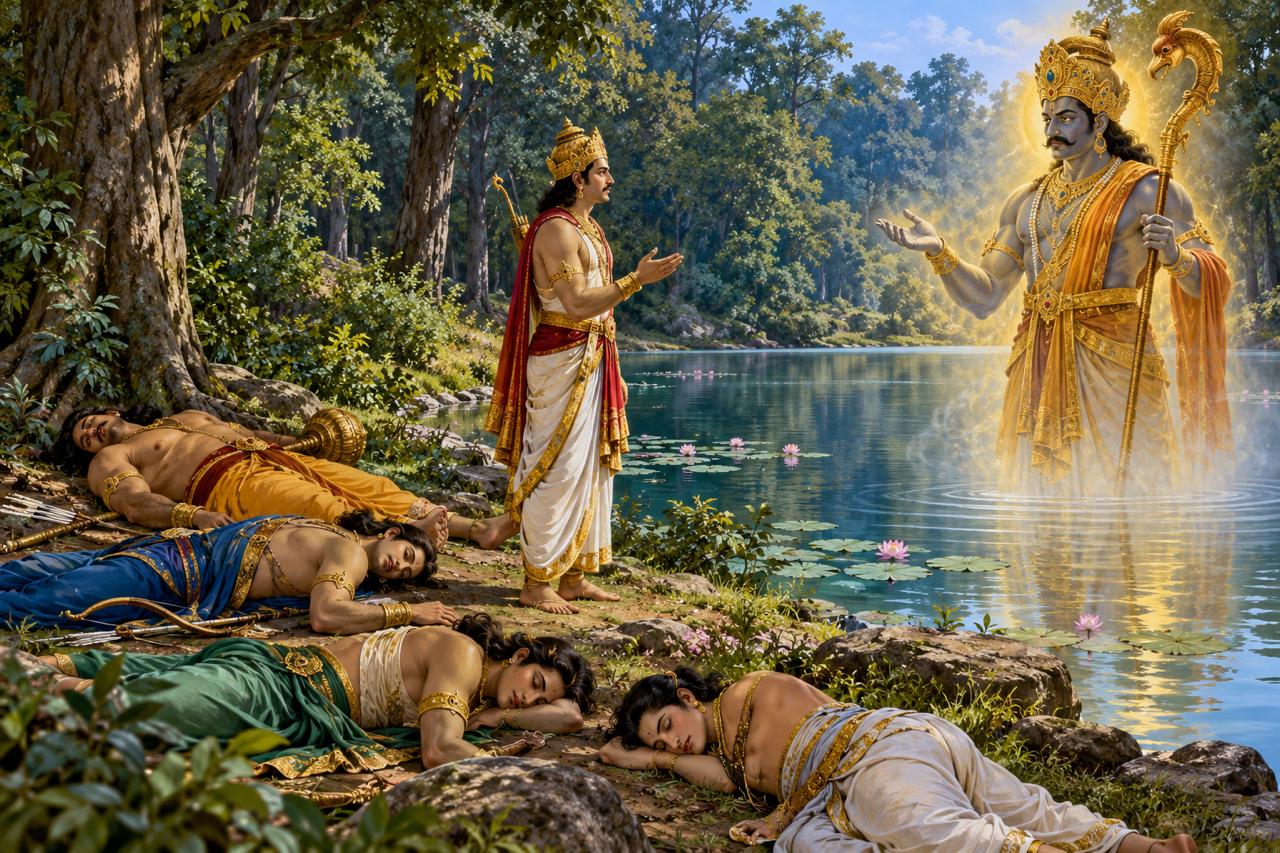
During their exile in the forest, Dharmaraya (Yudhishthira) becomes extremely thirsty. One after another, his brothers go to fetch water from a nearby lake, but none of them returns. After waiting for a long time, Dharmaraya himself goes in search of them. To his utter shock, he finds all his brothers lying motionless on the bank of the lake.
Suddenly, a disembodied voice is heard:
“Answer my question before drinking water. Otherwise, you too will fall to the ground like your brothers!”
It is the warning of a Yaksha, the guardian of the lake.
The Yaksha asks:
“What is the most astonishing thing in this world?”
Dharmaraya replies:
"Ahanyahani bhūtāni praviśanti yamālayam,
Śeṣāḥ sthāvaram icchanti kim āścaryam ataḥ param?"
“Every day, living beings die and depart to the abode of Yama, the Lord of Death. Yet, despite witnessing this, human beings wish to live forever on this earth. What could be more astonishing than this?”
Dharmaraya’s answer is certainly appropriate. But, in our view, something even more astonishing lies in the decision he makes immediately afterwards.
The Yaksha asks:
“I can restore only one of your four fallen brothers to life. Whom would you choose?”
Dharmaraya chooses Nakula.
The Yaksha is surprised.
“Bhima possesses extraordinary physical strength, and Arjuna is an incomparable archer. Do you not need these two warriors who are capable of confronting Duryodhana?”
Dharmaraya replies:
“We three are the sons of Kunti, while the other two are the sons of my stepmother Madri. I, a son of Kunti, am still alive. If Nakula is restored to life, my stepmother Madri too will have one surviving son. Both mothers are equally dear to me.”
The Yaksha is deeply moved by Dharmaraya’s sense of justice and fairness. Pleased with his choice, he restores all four brothers to life.
Who can escape death? Not merely every human being born into this world, but every living creature in creation must die one day. Everyone knows this truth.
Yet the strange thing is the illusion that “Death comes only to others, never to oneself!”
When people hear of someone’s death, they shed a few tears, pray for the departed soul to rest in peace, and the very next moment forget everything and become absorbed in their daily affairs.
But when they themselves fall ill and are admitted to a hospital, and the doctors diagnose cancer and indicate that they may not live much longer, the very thought of their own death makes their hearts tremble.
What makes human life truly meaningful? Does its fulfilment lie in power and position? In wealth? In the respect and recognition one earns in society? Or does it lie in something beyond all these? If so, what is it?
An extraordinary literary masterpiece that raises such questions in the minds of readers is the short novel The Death of Ivan Ilyich, written by the great Russian author Leo Tolstoy.
Published in 1886, this work may appear to be a story about death, but in reality, it is a profound exploration of the true meaning of life.
One day, judges and officials are engaged in their usual work at a courthouse. During a break, they glance through a newspaper and come across the unexpected news of the death of their middle-aged colleague, Judge Ivan Ilyich.
Everyone expresses sorrow at his passing. But the thoughts passing through their minds are quite different.
They are not frightened by the possibility that death might come to them too, just as unexpectedly as it came to Ivan. Instead, they begin to wonder whether his vacant position might offer them an opportunity for promotion. Others calculate whether his death might help them avoid an inconvenient transfer.
Deep within their hearts, everyone experiences an unspoken sense of relief:
“It is he who has died, not I!”
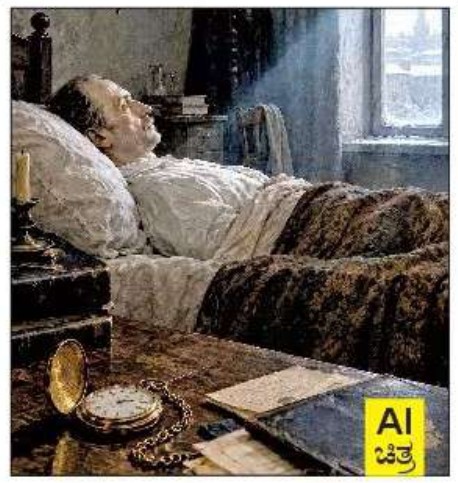
Peter, one of Ivan’s colleagues, visits the deceased judge’s home to offer his condolences. He looks at Ivan lying in his coffin.
There is an expression of peace on Ivan’s face. It seems as though he has discovered some truth that remains unknown to those who are still alive!
Ivan’s wife, Praskovya, speaks about the grief caused by her husband’s death. But in the course of the conversation, she also raises a practical question: how much money might she receive from the government following her husband’s death?
Peter does not remain beside the dead body for long. He soon leaves the house, goes to his club, and joins his friends in a game of cards.
Thus, Tolstoy begins his novel with the news of his protagonist’s death and then unfolds the story of his life through a series of events narrated retrospectively, almost like a flashback.
Ivan Ilyich has been intelligent since childhood. After studying law, he enters government service. Winning the approval of his superiors, securing promotions, and establishing himself as a respectable member of society become the principal goals of his life.
He tries to live just as the distinguished and influential people around him do.
He marries a beautiful young woman, and their married life is pleasant in the beginning. Gradually, however, misunderstandings and disagreements arise between husband and wife.
Instead of speaking openly with his wife and resolving their differences, Ivan immerses himself more and more deeply in his judicial work to escape the unpleasant atmosphere at home. Spending his time among legal documents and court cases becomes more agreeable to him than family life.
As time passes, he obtains a prestigious position and a handsome salary. He acquires a new home and purchases expensive furniture, curtains, carpets, and decorative articles.
One day, while standing on a ladder to arrange the curtains near a window, he accidentally slips and falls. His side strikes the window frame with considerable force.
He laughs off the incident, dismissing it as a minor injury.
A few days later, however, pain begins to trouble him. It grows increasingly severe, and he seeks medical treatment. His condition worsens until he is confined to bed.
One day, he asks the doctor:
“Doctor, is my illness serious? Am I going to die?”
The doctor gives no direct answer.
Ivan is reminded of the cases he used to hear in his courtroom. He recalls how he would remain absorbed in legal procedures without paying attention to the fear, anxiety, and suffering of the accused persons standing before him.
Now he feels that the doctors are treating him in much the same way!
More than his physical pain, it is the behaviour of those around him that torments Ivan.
To his wife, her husband’s illness becomes a great inconvenience. His daughter remains preoccupied with her approaching marriage and the pleasures of social gatherings. Relatives and friends visit him, make polite enquiries about his health, and leave.
Ivan gradually senses that his death is approaching.
What pains him most is the feeling that there is no one who truly understands his condition and speaks a few affectionate words to comfort him.
At this stage, the person who cares for him is Gerasim, a poor servant employed in his household.
Gerasim is not highly educated, but he possesses an abundance of humanity and compassion.
He notices that Ivan’s pain diminishes somewhat when his legs are raised. So he sits beside him, supporting his master's legs on his shoulders.
Ivan feels embarrassed by such devoted service.
“Doesn't this cause you a great deal of trouble?” he asks.
“What trouble is there in this, sir? You are suffering from an illness. What is wrong with helping you?” Gerasim replies humbly.
Those simple words touch Ivan’s heart.
Here is a poor servant offering him the human warmth and consolation that neither his wife nor his children have been able to give!
Ivan begins to reflect upon his entire life.
What has he been living for all these years?
Promotions, salary, power, a beautiful house, expensive furniture: can any of these things now lessen his suffering? Can they save him from death?
Numerous questions of this kind arise in Ivan’s mind.
What matters is not how many years a person has lived, but how that person has lived.
Even if one lives for a hundred years, what meaning can such a life have if it is spent in selfishness, arrogance, hatred, and jealousy?
When a person holds power, everyone shows respect. When one possesses wealth, relatives and friends gather around. When one enjoys good health, one can indulge in the pleasures and comforts of life.
But when illness confines a person to bed and leaves him suffering helplessly, all these things begin to appear meaningless.
What one needs at such a moment is a loving hand to hold and a compassionate heart that feels another's pain!
- Sri Taralabalu Jagadguru
Dr. Shivamurthy Shivacharya Mahaswamiji
Sri Taralabalu Jagadguru Brihanmath, Sirigere
Published in Vijaya Karnataka,
Bisilu Beladingalu, 22 Oct 2026.
What exactly is this Yaksha Prashna? It refers to an episode in the Vana Parva of the Mahabharata.
During their exile in the forest, Dharmaraya (Yudhishthira) becomes extremely thirsty. One after another, his brothers go to fetch water from a nearby lake, but none of them returns. After waiting for a long time, Dharmaraya himself goes in search of them. To his utter shock, he finds all his brothers lying motionless on the bank of the lake.
Suddenly, a disembodied voice is heard:
“Answer my question before drinking water. Otherwise, you too will fall to the ground like your brothers!”
It is the warning of a Yaksha, the guardian of the lake.
The Yaksha asks:
“What is the most astonishing thing in this world?”
Dharmaraya replies:
"Ahanyahani bhūtāni praviśanti yamālayam,
Śeṣāḥ sthāvaram icchanti kim āścaryam ataḥ param?"
“Every day, living beings die and depart to the abode of Yama, the Lord of Death. Yet, despite witnessing this, human beings wish to live forever on this earth. What could be more astonishing than this?”
Dharmaraya’s answer is certainly appropriate. But, in our view, something even more astonishing lies in the decision he makes immediately afterwards.
The Yaksha asks:
“I can restore only one of your four fallen brothers to life. Whom would you choose?”
Dharmaraya chooses Nakula.
The Yaksha is surprised.
“Bhima possesses extraordinary physical strength, and Arjuna is an incomparable archer. Do you not need these two warriors who are capable of confronting Duryodhana?”
Dharmaraya replies:
“We three are the sons of Kunti, while the other two are the sons of my stepmother Madri. I, a son of Kunti, am still alive. If Nakula is restored to life, my stepmother Madri too will have one surviving son. Both mothers are equally dear to me.”
The Yaksha is deeply moved by Dharmaraya’s sense of justice and fairness. Pleased with his choice, he restores all four brothers to life.
Who can escape death? Not merely every human being born into this world, but every living creature in creation must die one day. Everyone knows this truth.
Yet the strange thing is the illusion that “Death comes only to others, never to oneself!”
When people hear of someone’s death, they shed a few tears, pray for the departed soul to rest in peace, and the very next moment forget everything and become absorbed in their daily affairs.
But when they themselves fall ill and are admitted to a hospital, and the doctors diagnose cancer and indicate that they may not live much longer, the very thought of their own death makes their hearts tremble.
What makes human life truly meaningful? Does its fulfilment lie in power and position? In wealth? In the respect and recognition one earns in society? Or does it lie in something beyond all these? If so, what is it?
An extraordinary literary masterpiece that raises such questions in the minds of readers is the short novel The Death of Ivan Ilyich, written by the great Russian author Leo Tolstoy.
Published in 1886, this work may appear to be a story about death, but in reality, it is a profound exploration of the true meaning of life.
One day, judges and officials are engaged in their usual work at a courthouse. During a break, they glance through a newspaper and come across the unexpected news of the death of their middle-aged colleague, Judge Ivan Ilyich.
Everyone expresses sorrow at his passing. But the thoughts passing through their minds are quite different.
They are not frightened by the possibility that death might come to them too, just as unexpectedly as it came to Ivan. Instead, they begin to wonder whether his vacant position might offer them an opportunity for promotion. Others calculate whether his death might help them avoid an inconvenient transfer.
Deep within their hearts, everyone experiences an unspoken sense of relief:
“It is he who has died, not I!”
Peter, one of Ivan’s colleagues, visits the deceased judge’s home to offer his condolences. He looks at Ivan lying in his coffin.
There is an expression of peace on Ivan’s face. It seems as though he has discovered some truth that remains unknown to those who are still alive!
Ivan’s wife, Praskovya, speaks about the grief caused by her husband’s death. But in the course of the conversation, she also raises a practical question: how much money might she receive from the government following her husband’s death?
Peter does not remain beside the dead body for long. He soon leaves the house, goes to his club, and joins his friends in a game of cards.
Thus, Tolstoy begins his novel with the news of his protagonist’s death and then unfolds the story of his life through a series of events narrated retrospectively, almost like a flashback.
Ivan Ilyich has been intelligent since childhood. After studying law, he enters government service. Winning the approval of his superiors, securing promotions, and establishing himself as a respectable member of society become the principal goals of his life.
He tries to live just as the distinguished and influential people around him do.
He marries a beautiful young woman, and their married life is pleasant in the beginning. Gradually, however, misunderstandings and disagreements arise between husband and wife.
Instead of speaking openly with his wife and resolving their differences, Ivan immerses himself more and more deeply in his judicial work to escape the unpleasant atmosphere at home. Spending his time among legal documents and court cases becomes more agreeable to him than family life.
As time passes, he obtains a prestigious position and a handsome salary. He acquires a new home and purchases expensive furniture, curtains, carpets, and decorative articles.
One day, while standing on a ladder to arrange the curtains near a window, he accidentally slips and falls. His side strikes the window frame with considerable force.
He laughs off the incident, dismissing it as a minor injury.
A few days later, however, pain begins to trouble him. It grows increasingly severe, and he seeks medical treatment. His condition worsens until he is confined to bed.
One day, he asks the doctor:
“Doctor, is my illness serious? Am I going to die?”
The doctor gives no direct answer.
Ivan is reminded of the cases he used to hear in his courtroom. He recalls how he would remain absorbed in legal procedures without paying attention to the fear, anxiety, and suffering of the accused persons standing before him.
Now he feels that the doctors are treating him in much the same way!
More than his physical pain, it is the behaviour of those around him that torments Ivan.
To his wife, her husband’s illness becomes a great inconvenience. His daughter remains preoccupied with her approaching marriage and the pleasures of social gatherings. Relatives and friends visit him, make polite enquiries about his health, and leave.
Ivan gradually senses that his death is approaching.
What pains him most is the feeling that there is no one who truly understands his condition and speaks a few affectionate words to comfort him.
At this stage, the person who cares for him is Gerasim, a poor servant employed in his household.
Gerasim is not highly educated, but he possesses an abundance of humanity and compassion.
He notices that Ivan’s pain diminishes somewhat when his legs are raised. So he sits beside him, supporting his master's legs on his shoulders.
Ivan feels embarrassed by such devoted service.
“Doesn't this cause you a great deal of trouble?” he asks.
“What trouble is there in this, sir? You are suffering from an illness. What is wrong with helping you?” Gerasim replies humbly.
Those simple words touch Ivan’s heart.
Here is a poor servant offering him the human warmth and consolation that neither his wife nor his children have been able to give!
Ivan begins to reflect upon his entire life.
What has he been living for all these years?
Promotions, salary, power, a beautiful house, expensive furniture: can any of these things now lessen his suffering? Can they save him from death?
Numerous questions of this kind arise in Ivan’s mind.
What matters is not how many years a person has lived, but how that person has lived.
Even if one lives for a hundred years, what meaning can such a life have if it is spent in selfishness, arrogance, hatred, and jealousy?
When a person holds power, everyone shows respect. When one possesses wealth, relatives and friends gather around. When one enjoys good health, one can indulge in the pleasures and comforts of life.
But when illness confines a person to bed and leaves him suffering helplessly, all these things begin to appear meaningless.
What one needs at such a moment is a loving hand to hold and a compassionate heart that feels another's pain!
- Sri Taralabalu Jagadguru
Dr. Shivamurthy Shivacharya Mahaswamiji
Sri Taralabalu Jagadguru Brihanmath, Sirigere
Published in Vijaya Karnataka,
Bisilu Beladingalu, 22 Oct 2026.